
Root Canal Surgery
Preserve Your Smile
Root Canal Surgery
Preserve Your Smile
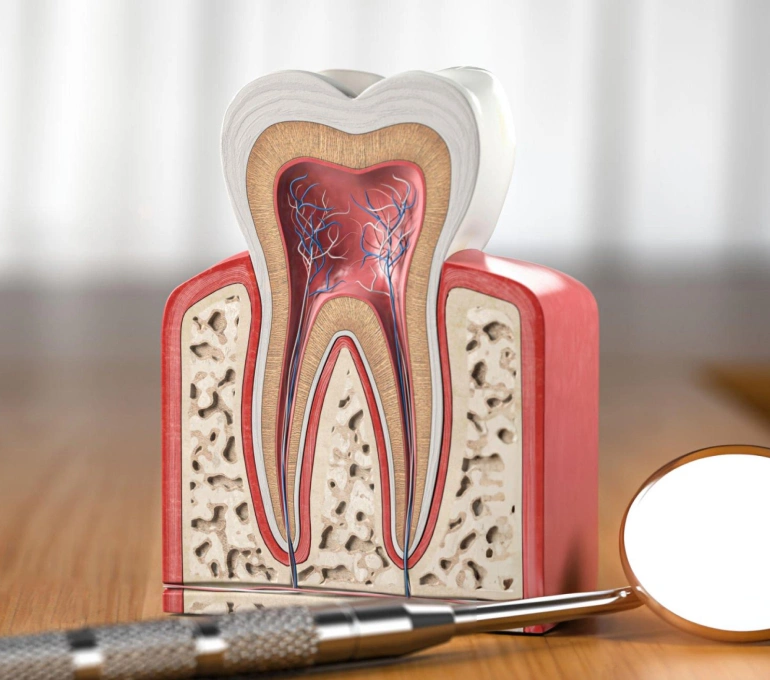
Root canal surgery becomes necessary when decay or infection affects the nerve of a tooth. This treatment aims to save the tooth by removing the pulp (the living tissue inside), nerves, bacteria, and any decayed material. The empty space is then filled with specialized, medicated dental materials, restoring the tooth’s function.
Many patients believe that extracting a problematic tooth is the best solution, but this can lead to more significant issues for surrounding teeth and ultimately be more costly. Root canal surgery is a highly effective procedure that can often last a lifetime, although some teeth may require retreatment due to new infections.
Signs You Might Need Root Canal Surgery
Be on the lookout for the following signs and symptoms that could indicate the need for root canal surgery:
- An abscess (pimple) on the gums
- Sensitivity to hot or cold temperatures
- Severe toothache
- Swelling or tenderness in the surrounding area
- Sometimes, no symptoms may be present at all
Common Reasons for Root Canal Surgery
Root canal surgery may be required for several reasons, including:
- Decay that has penetrated the tooth pulp
- Infection or abscess developing inside the tooth or at the root tip
- Injury or trauma to the tooth
The Root Canal Procedure
A root canal typically requires one or more appointments and can be performed by a general dentist or a specialist in root canal treatments.
- Numbing the Tooth: Before the procedure begins, the area around the tooth will be numbed. A rubber dam is placed around the tooth to keep it dry.
- Accessing the Tooth: An opening is made in the top of the tooth, and a series of specialized files are used to remove the pulp, nerve tissue, and any bacteria present. If decay is found, it will be removed using specialized instruments.
- Cleaning and Sealing: Once cleaned, the tooth will be sealed with a temporary filling if additional appointments are needed. In the next visit, the root canals and inner cavity will be filled and sealed with special dental materials. A final filling will cover the opening.
- Protecting the Tooth: To prevent future damage and restore full function, a crown (cap) is typically placed on the tooth after surgery.
After the procedure, some sensitivity may occur, but this will diminish as the inflammation decreases and the tooth heals. You'll receive care instructions to follow, and maintaining good oral hygiene along with regular dental visits will help prolong the success of your root canal surgery.