Veneers in Chicago, IL

Many Portage Park patients hesitate before choosing veneers. Their biggest worry? That their smile will look obviously fake. If you have wondered why modern veneers look like your real teeth, not fake in Portage Park, you are not alone. Thankfully, dental technology has changed everything about how veneers are made and applied today.
At City Edge Dental, Dr. Irene Gula hears this concern every week. Patients come in nervous about ending up with oversized, blindingly white porcelain. Modern veneers are nothing like that outdated image. Keep reading to understand exactly how today’s process creates results that blend seamlessly with your natural smile.
What Made Older Veneers Look So Unnatural in Portage Park
Early dental veneers had a reputation for looking artificial. They were often thick, overly opaque, and far too uniform in color. That uniformity was the problem. Real teeth are not one solid shade from root to tip.
Natural teeth have subtle color gradients. They are slightly darker near the gumline and lighter toward the biting edge. Older materials could not replicate this variation. The result was a smile that looked pasted on rather than grown in.
Older porcelain also lacked translucency. When light hit natural teeth, it passed through slightly before reflecting back. Early veneers blocked that light entirely. This gave them a flat, plastic appearance that patients and dentists both disliked.
How Modern Shade Matching Creates a Natural Veneer Result
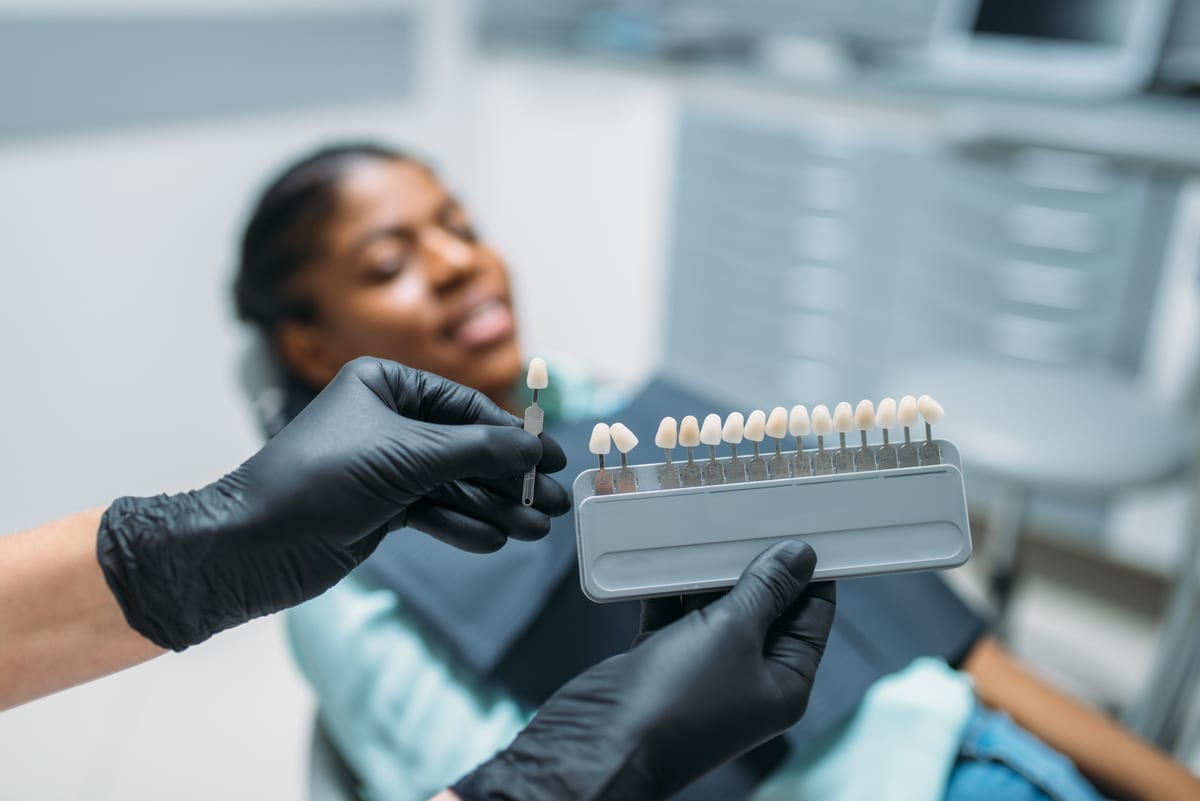
Today’s veneer process starts with a detailed shade analysis. Dr. Irene Gula uses a shade guide with dozens of color variations. This allows the team to find your exact baseline tooth color before any work begins.
Shade matching considers several factors at once:
- The natural base color of your existing teeth
- The color of your gums and surrounding tissue
- The lighting conditions in which you spend most of your time
- Your skin tone and facial features
- The level of brightness you personally want to achieve
This detailed process means your veneers complement your face. They do not overpower it. The goal is always a smile that looks like the best version of yours — not someone else’s smile placed over your teeth.
Digital shade mapping tools now assist dentists in capturing color nuances the human eye might miss. This technology has dramatically improved consistency between what is planned and what is delivered.
The Role of Translucency in Making Veneers Indistinguishable From Real Teeth
Translucency is one of the most important factors in a natural-looking veneer. Human enamel allows light to pass partway into the tooth structure. This gives teeth a slight inner glow. Without translucency, veneers look chalky or flat.
Modern porcelain ceramics are engineered to mimic this light behavior. Dental labs layer different levels of ceramic to create depth. The outer surface has higher translucency. The inner core has more opacity to mimic the dentin underneath.
This layering technique is called stratification. It builds a veneer from the inside out, just like a real tooth. When light hits a stratified veneer, it interacts with each layer before reflecting back. The effect is a lifelike, three-dimensional appearance.
The thickness of modern veneers also contributes to this effect. Ultra-thin veneers as thin as 0.3 millimeters preserve more of your natural tooth structure. They also allow more of your original tooth’s color to show through, further boosting authenticity.
What to Expect During Your Veneer Consultation at City Edge Dental
Understanding the process helps ease anxiety. Here is what typically happens when you visit City Edge Dental for veneers in Portage Park:
- Initial consultation: Dr. Gula reviews your dental and aesthetic goals in detail.
- Digital imaging: Photos and scans capture your current smile from multiple angles.
- Shade selection: The team works with you to choose a shade that fits your natural look.
- Tooth preparation: A thin layer of enamel is gently removed to make room for the veneer.
- Impressions: Detailed impressions go to a dental lab where your custom veneers are crafted.
- Temporary veneers: You wear temporaries while your permanent set is being made.
- Placement and bonding: Dr. Gula checks fit, color, and bite before permanently bonding each veneer.
Every step is designed around your comfort. The consultation is entirely educational. You ask questions and get honest, clear answers before committing to anything.
Patients who are also considering long-term tooth replacement options may want to explore Implant Dentistry as a complementary solution for missing teeth alongside veneers.
Why Portage Park Patients Choose Natural-Looking Veneers Over Whitening Alone
Teeth whitening is a great option for mild discoloration. But it cannot fix chips, uneven edges, or deep staining that does not respond to bleaching. That is where veneers offer a distinct advantage.
Veneers address multiple cosmetic concerns at once:
- Chips and small fractures along the biting edge
- Stubborn stains from tetracycline, fluorosis, or aging
- Minor gaps and spacing issues between front teeth
- Uneven tooth lengths that affect smile symmetry
- Slight crowding or overlapping in the front teeth
Because veneers are custom-made, they can also reshape teeth that are too short or too narrow. The result is balanced smile proportions that look completely natural. Whitening alone cannot achieve this level of transformation.
For families with younger members who need early orthodontic or dental care, City Edge Dental also provides Pediatric Dentistry services tailored to children’s unique needs.
Maintaining Your Natural-Looking Veneers Long Term
Modern veneers are durable, but they need consistent care. With proper maintenance, porcelain veneers can last 10 to 15 years or longer. The good news is that care is straightforward.
Dr. Gula recommends these maintenance habits for veneer patients:
- Brush twice daily with a non-abrasive toothpaste
- Floss carefully around each veneer every day
- Avoid biting hard objects like ice, pens, or fingernails
- Wear a nightguard if you grind your teeth during sleep
- Schedule regular cleanings and checkups at City Edge Dental
Avoiding staining beverages in excess, such as coffee, red wine, and dark teas, also helps preserve veneer brightness. Porcelain is stain-resistant, but the bonding edges can pick up color over time. Good habits keep your smile looking its best for years.
Conclusion: A Natural Smile Is Absolutely Achievable With Modern Veneers
You do not have to choose between improving your smile and keeping it looking real. Modern veneer technology has made that trade-off completely unnecessary. Shade matching, translucency engineering, and ultra-thin materials all work together to produce results that are genuinely indistinguishable from natural teeth.
Dr. Irene Gula and the team at City Edge Dental in Chicago understand that patients in Portage Park want results that enhance their confidence without drawing unwanted attention. That is exactly the standard we hold ourselves to with every veneer case.
If you are ready to explore whether veneers are the right choice for your smile, we are here to guide you every step of the way. Book Now to schedule your appointment with our team.
Frequently Asked Questions
Will my veneers look fake or too white?
Modern veneers are designed to match your natural tooth color and translucency. Dr. Gula uses detailed shade analysis and advanced ceramics to ensure your veneers blend seamlessly with your surrounding teeth. The goal is a natural, enhanced smile — not an artificial one.
How long does the veneer process take in Portage Park?
The full process typically takes two to three appointments over two to three weeks. The first visit covers consultation and tooth preparation. The second appointment places your permanent, custom-made veneers. Temporary veneers protect your teeth between visits.
Do veneers require removing a lot of my natural tooth structure?
Modern ultra-thin veneers require minimal enamel removal — sometimes as little as 0.3 millimeters. Dr. Gula takes a conservative approach to preserve as much natural tooth structure as possible while still achieving a secure and natural-looking result.
How do I know which shade of veneer is right for me?
During your consultation, Dr. Gula walks you through a detailed shade selection process. The team considers your skin tone, eye color, existing tooth color, and personal preferences. The goal is a shade that looks naturally bright without appearing artificial or overpowering.
Can veneers fix more than just discoloration?
Yes. Veneers address chips, cracks, minor gaps, uneven lengths, and stubborn stains that whitening cannot remove. Because each veneer is custom-crafted, they can also improve the overall shape and symmetry of your smile in one treatment.